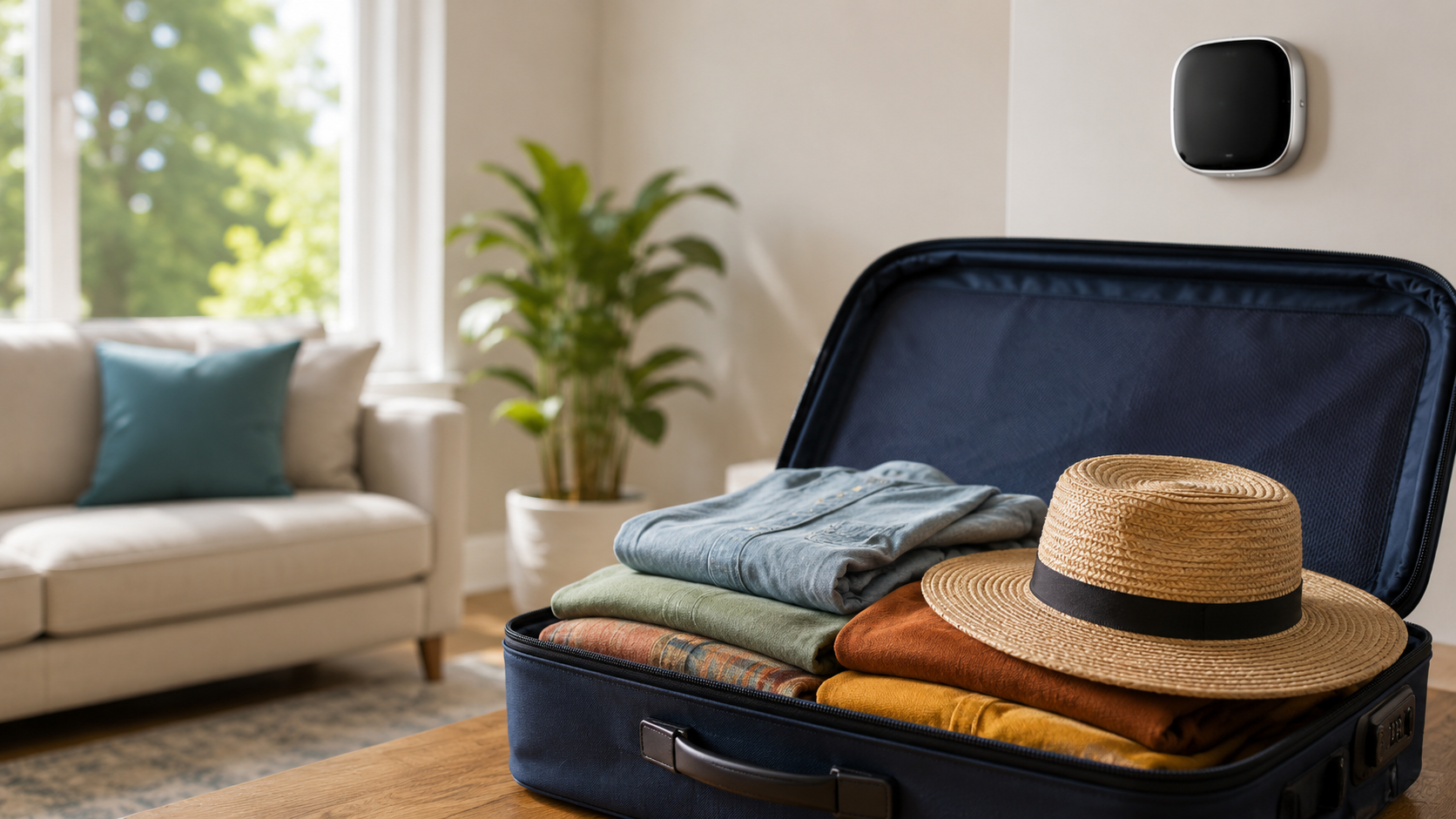
July is a popular month for weekend trips, lake visits, family vacations, and time away from home. Before leaving, many homeowners wonder whether they should turn off the air conditioner to save energy.
In most cases, completely shutting down your cooling system is not recommended. Your home still needs some temperature and humidity control, even when no one is there.
The right thermostat setting can reduce unnecessary cooling while helping protect your home, belongings, pets, and indoor air quality.
What Temperature Should You Set the AC to While on Vacation?
For many homes, a thermostat setting between 78 and 85 degrees is reasonable during a summer vacation. The ideal setting depends on the outdoor weather, the length of your trip, your home’s insulation, indoor humidity, and whether anyone or anything remains in the house.
A setting near 80 degrees is often a practical starting point. It allows the system to operate less frequently without letting indoor conditions become excessively hot.
Do not use a vacation setting that could put pets, plants, medications, electronics, artwork, or other temperature sensitive items at risk.
Why Should You Leave the Air Conditioner On?
Turning off the air conditioner may reduce cooling use, but it also removes an important source of humidity control.
As indoor temperatures and moisture levels rise, the house may begin to feel damp or develop musty odors. High humidity can also contribute to condensation and moisture related problems.
Keeping the system active at a higher temperature allows it to run occasionally and remove some heat and moisture from the indoor air.
How Should You Prepare Your AC Before Leaving?
A few simple steps can help your system operate reliably while you are away.
Replace a Dirty Air Filter
Check the HVAC filter before your trip. A clogged filter restricts airflow and makes the air conditioner work harder.
Install the correct filter size and type for your system. If you are uncertain about which filter to use, consult the equipment manual or an HVAC professional.
Use a Programmable or Smart Thermostat
A programmable thermostat allows you to adjust the temperature based on your travel schedule. A smart thermostat may also let you monitor and change settings from your phone.
Set the temperature higher after you leave and program it to return to your preferred setting before you arrive home. Avoid large, frequent adjustments that cause the system to work unnecessarily.
Check the Outdoor Equipment
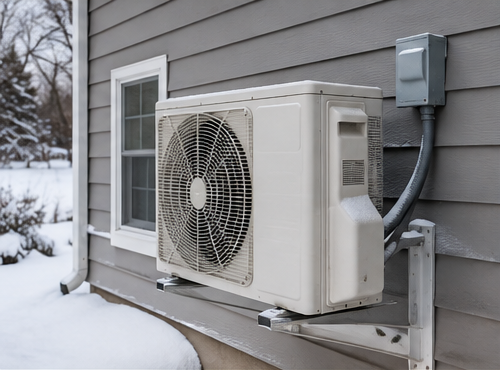
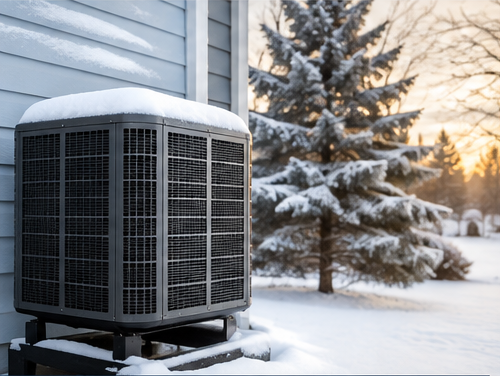
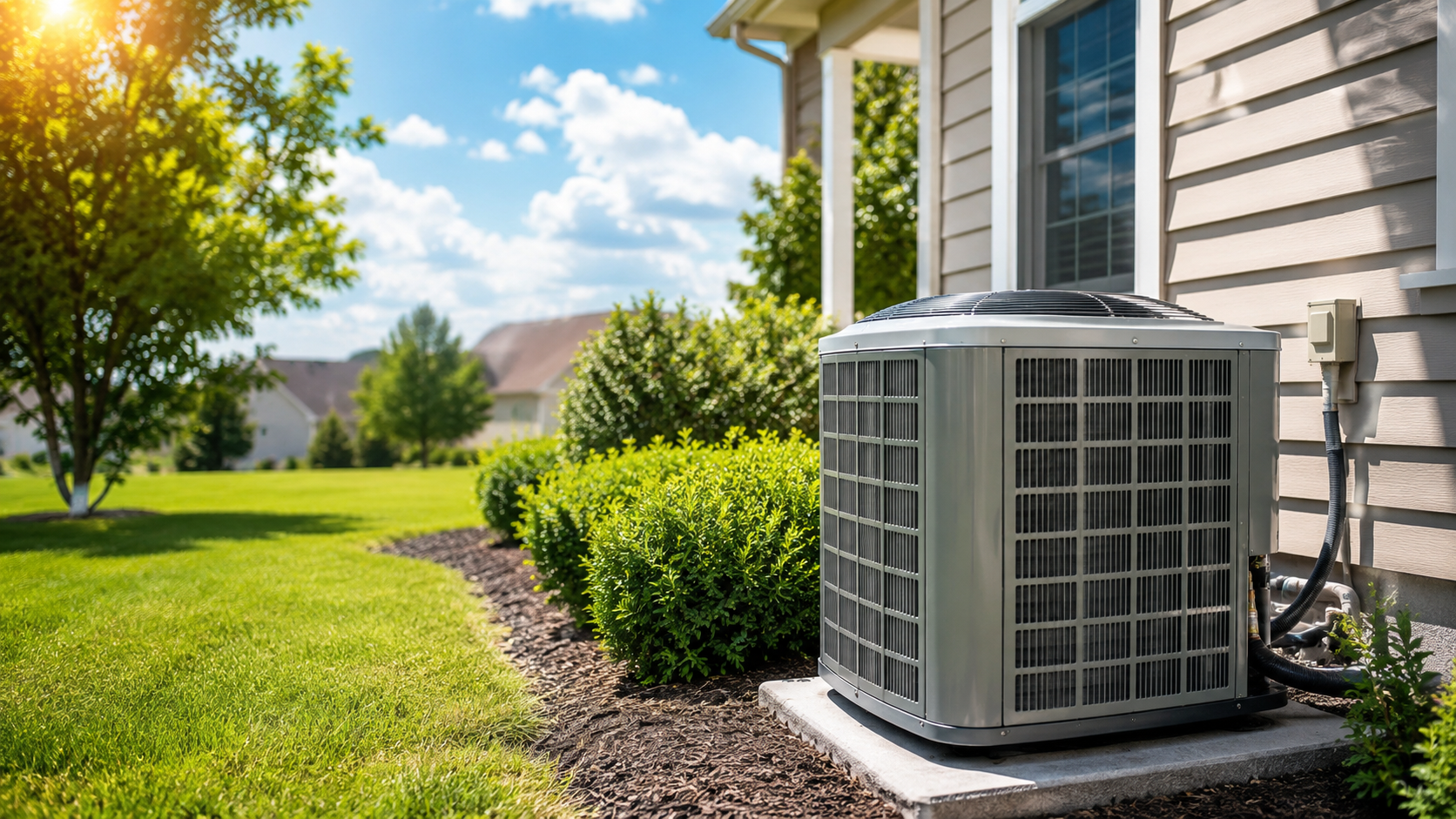
Make sure the area around the outdoor air conditioning unit is free of leaves, grass clippings, branches, and other debris. Provide enough open space for airflow.
Do not cover the outdoor unit during the cooling season. A cover can block airflow and cause the system to overheat if it turns on.
Leave Interior Doors Open
Keep interior doors open so air can circulate throughout the house. Closed doors may create isolated rooms with limited airflow and higher temperatures.
Supply and return vents should also remain open and unobstructed.
Close Curtains and Blinds
Sunlight entering through windows can raise indoor temperatures. Close curtains, shades, or blinds before leaving, especially on windows that receive direct afternoon sun.
This reduces heat gain and may decrease the amount of time your air conditioner needs to run.
Confirm That Windows Are Closed
Check windows, patio doors, and exterior doors before leaving. Even a small opening can allow warm, humid outdoor air to enter.
You should also confirm that bathroom and kitchen exhaust fans have been turned off.
Should You Schedule AC Maintenance Before a Trip?
If your air conditioner has been making unusual noises, producing weak airflow, struggling to cool the home, or running constantly, schedule service before leaving.
A system that is already showing signs of trouble may fail while the home is unattended. Addressing the issue early can reduce the risk of returning to an overheated or humid house.
Seasonal maintenance is also helpful before extended travel. During an appointment, a technician can inspect system operation, check accessible components, evaluate airflow, and identify visible concerns.
Frequently Asked Questions
Should I turn off my AC for a weekend trip?
It is usually better to raise the thermostat than to turn the system off completely. A higher setting reduces cooling demand while maintaining some control over heat and humidity.
Is 85 degrees too hot for a vacant house?
A setting of 85 degrees may work for some homes, but it could be too warm for pets, plants, medications, electronics, and moisture sensitive belongings. Consider your home’s conditions before selecting a temperature.
Should I leave the HVAC fan running?
Set the fan to auto rather than on. The fan will operate during cooling cycles and shut off when the cycle ends. This generally uses less electricity than continuous fan operation.
Can a smart thermostat alert me to an AC problem?
Some smart thermostats can send alerts about unusual indoor temperatures, humidity, or system activity. Features vary by model, and thermostat alerts do not replace professional HVAC diagnostics.
Come Home to a Comfortable House
Preparing your air conditioner before a July vacation only takes a few minutes, but it can make a noticeable difference when you return.
Home Care Heating and Air provides air conditioning maintenance, repair, thermostat, and replacement services throughout the Twin Cities area. If your system has been unreliable or is not keeping your home comfortable, schedule service before your next summer trip.
A professional inspection can help you leave with greater confidence and return to a home that feels comfortable, cool, and ready to enjoy