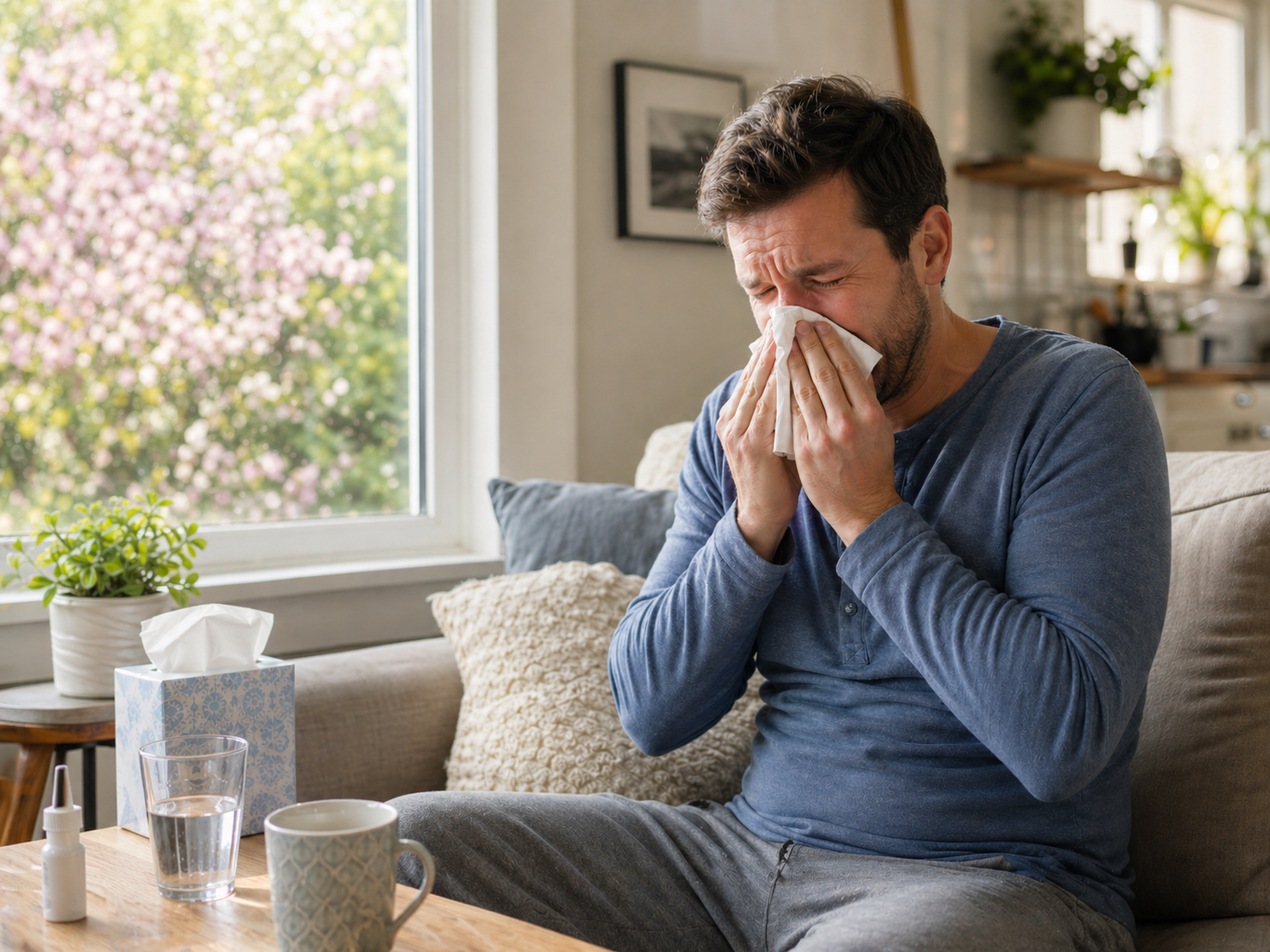
If your spring allergies feel worse than usual, your HVAC system may be playing a role.
As pollen levels climb, your home should feel like a break from the outdoors, not a place where allergens keep circulating.
Here are a few ways your system could be adding to the problem:
Dirty air filters
When filters get clogged, they can’t trap dust, pollen, and other allergens as well. Instead, those particles may keep moving through your home.
When filters get clogged, they can’t trap dust, pollen, and other allergens as well. Instead, those particles may keep moving through your home.
Leaky ductwork
Small gaps or leaks in your ducts can pull in unfiltered air from attics, crawl spaces, or other dusty areas.
Small gaps or leaks in your ducts can pull in unfiltered air from attics, crawl spaces, or other dusty areas.
Poor humidity balance
Air that’s too dry or too humid can make allergy symptoms worse and affect your overall indoor air quality.
Air that’s too dry or too humid can make allergy symptoms worse and affect your overall indoor air quality.
Not enough filtration
Basic filters may not catch smaller airborne particles, which means some allergens can still make their way through your system.
Basic filters may not catch smaller airborne particles, which means some allergens can still make their way through your system.
The good news is that these problems can usually be fixed. Upgrading your filters, sealing your ducts, and improving your home’s indoor air quality can make a real difference.
At Home Care Heating and Air, we look at comfort as a whole-home experience. Because breathing easier should always be part of feeling comfortable at home.